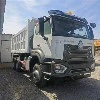
As the main force in the field of engineering transportation, the unique structural design of dump trucks ensures their efficiency and flexibility in transporting bulk materials. A standard dump truck mainly consists of the following major components:
1. Chassis
The chassis is the foundation of a dump truck, carrying all the weight and power system of the vehicle. It consists of a frame, suspension, axle, tires, braking system, steering system, and transmission system. The frame is usually made of high-strength steel, providing solid support for the entire vehicle. The suspension system is responsible for absorbing road impacts and ensuring smooth driving. The design of axles and tires should take into account load capacity and road conditions. The braking system ensures safe parking of the vehicle in various situations, while the steering and transmission systems are responsible for controlling the direction and transmitting engine power.
2. Powertrain
The power system includes the engine, gearbox, clutch (manual transmission model) or hydraulic torque converter (automatic transmission model), and drive axle. The engine is the heart of a dump truck, commonly found in diesel and natural gas engines, providing the driving force required for the vehicle to move forward. The gearbox is responsible for adjusting the torque and speed output of the engine to adapt to different driving conditions. The drive axle transmits power to the wheels, driving the vehicle forward.
3. Cargo Box
The cargo box is the most prominent part of a dump truck, and its design allows for automatic dumping of materials. Cargo boxes are usually made of high-strength steel or lightweight alloy materials to withstand the pressure generated during loading and unloading. The shape and size of the cargo box are customized according to the type and quantity of transported materials, and some are designed as open, making it easy to load and unload large or elongated objects; Some are enclosed and suitable for transporting fine materials or occasions that require dust and water prevention.
4. Hydraulic System
The hydraulic system is the key to achieving automatic dumping of cargo boxes. It consists of an oil pump, oil tank, oil pipe, control valve, and hydraulic cylinder. When the driver operates the control lever, the oil pump extracts hydraulic oil from the tank and delivers it to the hydraulic cylinder through the oil pipe, pushing the cargo box to tilt. The stability of the hydraulic system directly affects the safety and efficiency of the dump truck.
5. Control System
The control system includes a series of instrument panels, control buttons, and display screens inside the cab. Drivers use these devices to monitor the vehicle's status, such as speed, fuel level, temperature, etc., and control various functions of the vehicle, such as lighting, horns, and container tilting. Modern dump trucks may also be equipped with high-tech equipment such as GPS navigation, reverse imaging, and in vehicle communication systems to improve operational convenience and safety.
6. Safety System
The safety system is an important component of ensuring the safety of drivers and surrounding personnel, including but not limited to airbags, anti lock braking systems (ABS), electronic stability programs (ESP), reverse radar, and rear view cameras. These devices can reduce the probability of accidents and protect personnel from harm.
In summary, the structure of a dump truck is highly integrated and specialized, with each part working closely together to complete efficient material transportation and automatic dumping tasks.