



Tank Transport Semi-trailer
Tank Transport Semi-trailer General Specifications
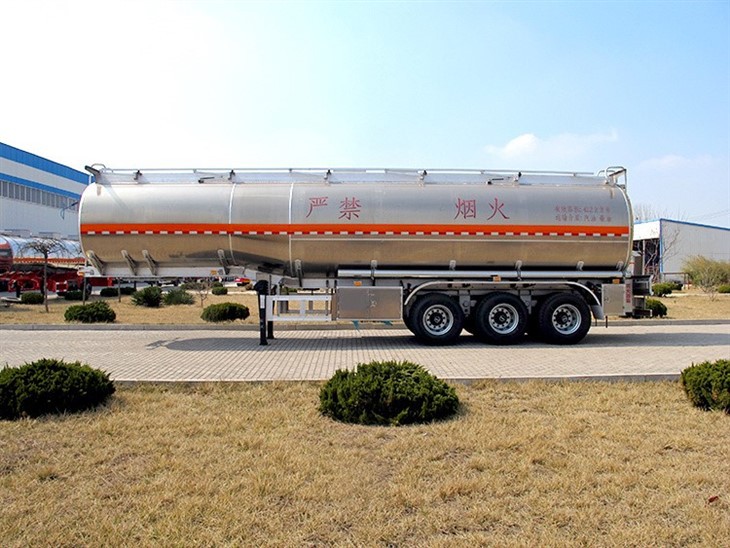
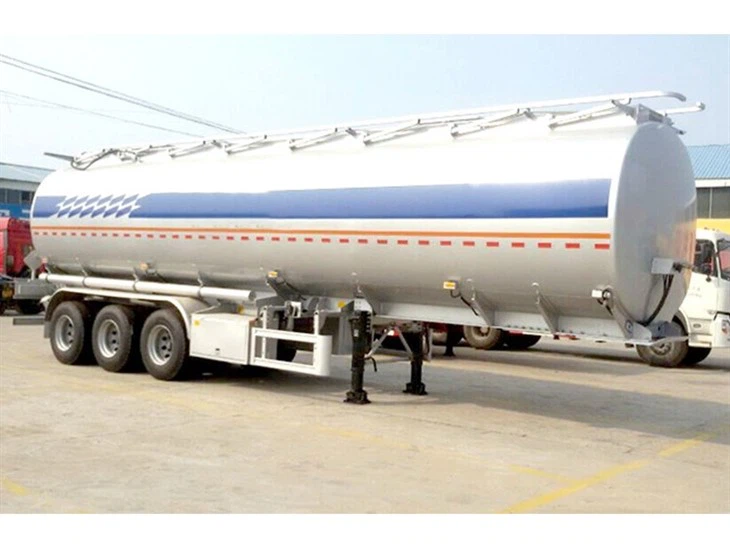
The Tank Transport Semi-trailer is a specialized vehicle designed for transporting liquids, gases, or powders in sealed containers. Below are its general specifications across key dimensions, load capacities, configurations, and safety features:
1. Size Specifications
| Parameter | Typical Range | Notes |
|---|---|---|
| Length | 9,000–13,000 mm (liquid/gas tanks);10,100–12,300 mm (powder tanks)148 | Extended versions (e.g., LNG tankers) may exceed 13,000 mm. |
| Width | 2,500–3,500 mm | Standard width is 2,500 mm; oversize models (e.g., for construction materials) can reach 3,500 mm.18 |
| Height | 3,600–4,000 mm (liquid/gas tanks);3,990 mm (powder tanks)138 | Limited by road regulations (e.g., ≤4,000 mm in China). |
| Working Platform Height | N/A | Not applicable for tankers (sealed containers). |
2. Capacity Specifications
| Parameter | Typical Range | Notes |
|---|---|---|
| Volume | - Liquid tanks: 30,000–60,000 liters (e.g., fuel, chemicals)19- Powder tanks: 28–55 m³ (e.g., cement, fly ash)48- LNG tanks: 40–60 m³ (low-temperature storage)5 | Customizable for special needs (e.g., 90,000 liters for bulk liquids).1 |
| Rated Load | 30–50 tons (standard models); up to 100+ tons (heavy-duty designs)19 | Depends on axle configuration and material strength. |
| Gross Vehicle Weight (GVW) | ≤49,000 kg (China standard)18 | Compliance with regional weight limits (e.g., 36,000–40,000 kg in EU).2 |
3. Axle & Tire Configurations
| Parameter | Typical Range | Notes |
|---|---|---|
| Axles | 2–3 axles (standard); 4–5 axles (heavy-duty)18 | Single-axle load: 13–18 tons (BPW/Fuwa brand preferred).19 |
| Tires | - Liquid/gas tanks: 12R22.5, 315/80R22.5 (12–16 tires)19- Powder tanks: 11R22.5, 12R22.5 (12 tires)48 | All-steel radial tires for durability and load-bearing. |
| Suspension | Mechanical (leaf spring) or air suspension18 | Air suspension improves stability and reduces cargo vibration. |
4. Material & Construction
| Component | Common Materials | Application |
|---|---|---|
| Tank Body | - Carbon steel: General liquids (fuel, water)110- Stainless steel: Food-grade liquids (milk, juice) or corrosive chemicals710- Aluminum alloy: Lightweight transport (e.g., fuel)19- Fiberglass/Steel-lined plastic: Strong acid/alkali resistance10 | Aluminum reduces weight by 20–30% compared to steel, enhancing fuel efficiency.19 |
| Internal Structure | Anti-sloshing baffles, smooth interior (for powders), thermal insulation (LNG tanks) | Baffles minimize liquid movement during braking; insulation maintains cryogenic temperatures (-162°C for LNG).7 |
5. Safety & Functional Features
| Feature | Description | Purpose | ||||||||||||||||||||
|---|---|---|---|---|---|---|---|---|---|---|---|---|---|---|---|---|---|---|---|---|---|---|
| Safety Valves | Pressure relief valves, vacuum breakers
6. Additional Components
Key Considerations for TradeMedium Compatibility: Match the tank material to the cargo (e.g., stainless steel for food-grade liquids). Regulatory Compliance: Ensure adherence to local road regulations (e.g., weight, height limits). Customization Options: Modular designs allow adjustments for volume, axle count, and safety features. This comprehensive specification guide aids in precise communication and procurement decisions for tank transport semi-trailers across industries. |
Prevent over-pressurization or implosion.17 | ||||||||||||||||||||
| Temperature Control | Insulation layers (e.g., polyurethane foam), heating systems (for viscous liquids)79 | Maintain optimal temperature for cargo (e.g., ≤1°C temperature rise in 30 hours for milk).7 | ||||||||||||||||||||
| Discharge Systems | - Liquid/gas: Pumps, bottom valves, rubb | |||||||||||||||||||||
II. Product Details
1. Tank Transport Semi-trailer: Size Specifications for Compliance & Versatility
The Tank Transport Semi-trailer features size designs tailored to regional road regulations and cargo types, ensuring both compliance and operational flexibility. For length, liquid/gas tank models typically range from 9,000 mm to 13,000 mm, while powder tank variants (equipped with pneumatic discharge systems) usually fall between 10,100 mm and 12,300 mm; extended versions for special cargo (e.g., large-capacity LNG tanks) may exceed 13,000 mm with customized approval. Width is standardized at 2,500 mm for universal road access, though oversize models (up to 3,500 mm) are available for non-standard bulk materials (e.g., industrial-grade powder transport). Height is strictly controlled within 3,600 mm to 4,000 mm to adhere to height limits in most regions, avoiding issues with bridges, tunnels, or overhead obstacles during transit.
2. Tank Transport Semi-trailer: Capacity & Load Capacity for Bulk Transport
Capacity and load capacity of the Tank Transport Semi-trailer are optimized for different cargo mediums. For liquid transport, tank volumes range from 30,000 liters to 60,000 liters (suitable for fuel, edible oil, or common chemicals), with customizable large-capacity options (up to 90,000 liters) for high-demand scenarios. Powder tanks offer 28 m³ to 55 m³ of internal volume, designed to work with pneumatic systems for fast, residue-free unloading. In terms of load capacity, standard models support a rated load of 30–50 tons, while heavy-duty variants (with 4–5 axles) can handle over 100 tons for ultra-heavy cargo (e.g., high-density industrial liquids). The gross vehicle weight (GVW) generally does not exceed 49,000 kg (per Chinese standards) or 36,000–40,000 kg (per EU standards), ensuring alignment with local weight restrictions to avoid fines or transit delays.
3. Tank Transport Semi-trailer: Tank Material & Structure for Medium Adaptability
The tank body-core component of the Tank Transport Semi-trailer-is crafted from materials selected for compatibility with specific cargo. Carbon steel is used for general liquids (e.g., diesel, water) due to its durability and cost-effectiveness. Stainless steel (304/316 grade) is ideal for food-grade liquids (milk, juice) or corrosive chemicals, as it resists rust and contamination. Aluminum alloy is chosen for lightweight needs (e.g., fuel transport), reducing vehicle weight by 20–30% to improve fuel efficiency. For strong acids/alkalis, fiberglass or steel-lined plastic tanks provide superior chemical resistance. Internally, liquid tanks include anti-sloshing baffles to minimize cargo movement during braking (reducing rollover risk), while powder tanks have smooth interiors to prevent material buildup. LNG tanks add vacuum insulation layers to maintain a cryogenic temperature of -162°C, preserving the liquid state of natural gas.
4. Tank Transport Semi-trailer: Axle, Tire & Suspension for Stability
The Tank Transport Semi-trailer is equipped with robust axle, tire, and suspension systems to ensure stable, safe transit-even with heavy or volatile cargo. Axle configurations include 2–3 axles for standard models (single-axle load: 13–18 tons) and 4–5 axles for heavy-duty versions, with reputable brands like BPW or Fuwa used for long service life. Tires are all-steel radial types, with common specifications including 12R22.5 and 315/80R22.5 (12–16 tires for standard models) to handle heavy loads and resist wear on long highways. Suspension options include mechanical leaf-spring (cost-effective for general use) and air suspension (premium choice for fragile cargo, as it reduces vibration to protect sensitive liquids or powders). Both suspension types undergo durability testing to ensure reliable performance for 8+ years.
5. Tank Transport Semi-trailer: Safety & Functional Features for Secure Operation
Safety and functionality are prioritized in the Tank Transport Semi-trailer to meet strict industry standards. Key safety components include pressure relief valves and vacuum breakers (preventing tank over-pressurization or implosion), ABS/EBS braking systems (ensuring short stopping distances), and anti-roll bars (reducing tipping risk). For temperature-sensitive cargo, insulation layers (polyurethane foam) or heating systems (for viscous liquids like asphalt) maintain optimal cargo conditions-e.g., limiting temperature rise to ≤1°C in 30 hours for milk transport. Discharge systems are tailored to cargo type: liquid/gas tanks use high-pressure pumps, bottom valves, and chemical-resistant rubber hoses; powder tanks rely on pneumatic blowers and discharge pipes for fast unloading (≤10 minutes for a 50 m³ tank). All models come with certifications (ADR for EU, DOT for US, GB7258 for China) to ensure compliance with international transport regulations.
6. Tank Transport Semi-trailer: Customization Options for Industry-Specific Needs
The Tank Transport Semi-trailer offers flexible customization to match unique trade requirements. For multi-product transport, liquid tanks can be divided into 1–7 separate chambers (e.g., for simultaneous transport of gasoline and diesel). Tractor connection components include 2-inch or 3.5-inch JOST-brand traction pins (ensuring secure coupling) and JOST/Fuwa landing gears (25–30 tons lifting capacity, supporting stable detachment/attachment). Additional options include GPS tracking systems (for real-time cargo monitoring), anti-corrosion coatings (for offshore or humid environments), and food-grade internal polishing (for pharmaceutical or beverage transport). These customizations allow the semi-trailer to adapt to industries ranging from petrochemicals to agriculture, enhancing its value for global trade clients


Hot Tags: tank transport semi-trailer, China tank transport semi-trailer manufacturers, factory, upgrade weight transport semi trailer, volume of trailer transport semi trailer, design compliant transport semi trailer, delivery weight transport semi trailer, dot compliant transport semi trailer, easy to operate transport semi trailer
You Might Also Like


Send Inquiry