

In the realm of logistics and transportation, flatbed semi - trailers have emerged as a cornerstone for businesses dealing with diverse cargo. As a seasoned flatbed semi - trailer supplier, I've witnessed firsthand the numerous advantages these trailers offer. In this blog, I'll delve into the key benefits of using a flatbed semi - trailer, which will help you understand why they are an indispensable asset in the transportation industry.
1. Versatility in Cargo Handling
One of the most significant advantages of flatbed semi - trailers is their unparalleled versatility. Unlike enclosed trailers that have specific dimensions and loading limitations, flatbed semi - trailers can accommodate a wide range of cargo types. Whether you're transporting construction materials such as steel beams, lumber, or concrete pipes, or oversized items like industrial machinery, wind turbine blades, or pre - fabricated building components, a flatbed semi - trailer can get the job done.
The open - top design of flatbed semi - trailers allows for easy loading and unloading from all sides. You can use cranes, forklifts, or other heavy - duty equipment to place the cargo on the trailer bed. This flexibility is especially crucial when dealing with irregularly shaped or extremely large items that cannot fit through the doors of an enclosed trailer. For example, if you need to transport a large piece of agricultural equipment with extended arms or a long - length shipping container, a flatbed semi - trailer provides the perfect solution.
2. Cost - Effectiveness
Cost is always a major consideration in any business operation. Flatbed semi - trailers offer a cost - effective transportation solution in several ways. Firstly, they are generally less expensive to purchase compared to specialized enclosed trailers. The simpler design of flatbed trailers means lower manufacturing costs, which are then passed on to the buyers.
Secondly, flatbed semi - trailers have lower maintenance requirements. With fewer moving parts and a more straightforward structure, there are fewer components that can break down or require regular servicing. This reduces the overall maintenance and repair costs over the lifespan of the trailer.
In addition, the loading and unloading process on a flatbed semi - trailer is often quicker and more efficient. Since you can use various types of equipment to load the cargo from multiple sides, it saves time and labor costs. This efficiency can lead to significant savings, especially for businesses that need to transport a large volume of goods on a regular basis.
3. Easy Visibility and Inspection
Another advantage of using a flatbed semi - trailer is the easy visibility of the cargo. Unlike enclosed trailers where the cargo is hidden from view, the open - bed design of flatbed semi - trailers allows for quick and easy inspection. You can visually check the condition of the cargo at any time during transit, ensuring that it is secure and undamaged.
This visibility is also beneficial for regulatory compliance. Transportation authorities often require regular inspections of the cargo to ensure that it is properly secured and within the legal weight limits. With a flatbed semi - trailer, these inspections can be carried out more efficiently, reducing the risk of fines or delays due to non - compliance.
4. Adaptability to Different Loading Methods
Flatbed semi - trailers can be loaded using a variety of methods, depending on the nature of the cargo. For heavy and large items, cranes are commonly used to lift the cargo onto the trailer bed. This method is ideal for transporting items such as large machinery or construction materials.
Forklifts are another popular loading option, especially for smaller and more manageable items. They can quickly move pallets or smaller pieces of equipment onto the trailer. Additionally, some flatbed semi - trailers are equipped with ramps, which allow for easy drive - on loading of vehicles or other self - propelled equipment.
This adaptability to different loading methods makes flatbed semi - trailers suitable for a wide range of industries. Whether you're in the construction, manufacturing, or agriculture sector, you can choose the loading method that best suits your cargo and operational needs.
5. Customization Options
As a flatbed semi - trailer supplier, I understand that different customers have different requirements. That's why flatbed semi - trailers offer a high degree of customization. You can choose the length, width, and height of the trailer bed according to your specific cargo needs. For example, if you frequently transport long - length items, you might opt for a 15.6m Flatbed Semi - Trailer, which provides ample space for extended cargo.
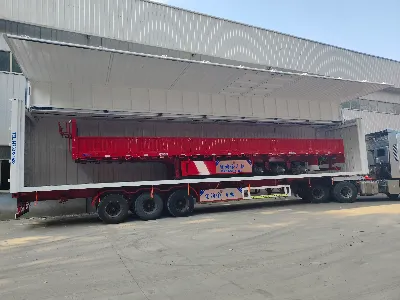
In addition to the basic dimensions, you can also customize the trailer's features. Some trailers come with removable side rails, which can be useful when you need to load or unload large items from the sides. Others may have adjustable tie - down points to secure the cargo more effectively. There are also specialized flatbed semi - trailers such as Spread Wing Semi - trailer and Straight Beam Flat Semi - Trailer, which are designed for specific types of cargo or transportation requirements.

6. Compatibility with Different Tractors
Flatbed semi - trailers are designed to be compatible with a wide range of tractors. This means that you can use your existing tractor fleet to pull the flatbed trailers, eliminating the need for additional investments in specialized towing vehicles.
The standardized coupling systems used in the industry ensure that the flatbed semi - trailer can be easily attached to different types of tractors. Whether you have a light - duty tractor for local deliveries or a heavy - duty tractor for long - haul transportation, you can find a flatbed semi - trailer that is compatible with it. This compatibility provides flexibility and cost - savings for businesses, as they can optimize their existing equipment and resources.
7. Better Maneuverability
Compared to some larger and more cumbersome trailers, flatbed semi - trailers generally offer better maneuverability. Their relatively simple design and lower weight distribution make them easier to turn, reverse, and park. This is especially important when operating in tight spaces such as construction sites, industrial yards, or urban areas.
The improved maneuverability also reduces the risk of accidents during transportation. Drivers can more easily navigate through traffic and around obstacles, ensuring the safety of the cargo and other road users.
Conclusion
In conclusion, the advantages of using a flatbed semi - trailer are numerous and significant. From their versatility in cargo handling and cost - effectiveness to easy visibility, adaptability to different loading methods, customization options, compatibility with different tractors, and better maneuverability, flatbed semi - trailers are an ideal choice for businesses in various industries.
If you're in the market for a flatbed semi - trailer, I encourage you to explore our wide range of products. We offer high - quality, customizable flatbed semi - trailers that can meet your specific transportation needs. Contact us today to start a conversation about your requirements and let's work together to find the perfect solution for your business.
References
- [1] "Transportation Logistics: Principles, Practices, and Trends" by John J. Coyle, Edward J. Bardi, and C. John Langley. This book provides in - depth knowledge about different types of trailers and their applications in the logistics industry.
- [2] Industry reports from transportation research institutions, which analyze the performance and benefits of flatbed semi - trailers in real - world transportation scenarios.


