


Agricultural Engineering Vehicle
Why Choose Us?
High Quality: Company has the first- -class standard and strong product ion capacity of flow process production tooling equipment,the use of advanced production technology and high quality raw materials and spare parts,with reliable quality assurance system, the maximum to meet user needs, Sincerely provide users with advanced, high quality series of special trailers.
Complete Range Of Products: Rear dump, side dump, powder material transport vehicle, warehouse semi-trailer, low flatbed, skeleton semi-trailer, container semi-trailer, large cargo transport semi-trailer, wind power equipment transport semi-trailer, flatbed transport semi-trailer, engineering equipment transport semi-trailer.
Advanced Equipment: Automatic longitudinal beam submerged arc welding line, advanced CNC web punching production line, fiber laser cutting machine cutting, automated web CNC punching production line, automated robot welding, automated longitudinal beam submerged arc line.
What Are the Products of Agricultural Engineering Vehicle
Agricultural Rice Transplanter
High Quality Seeder
Durable Rotary Tiller
Corn Rapid Picking Machine
Large Cotton Harvester
Small Wheat Harvester
Quick and Convenient Rice Harvester
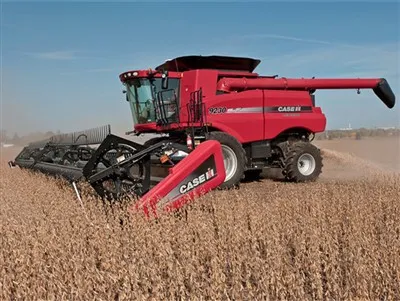
Household Soybean Harvester
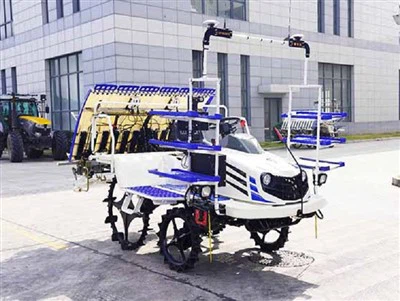
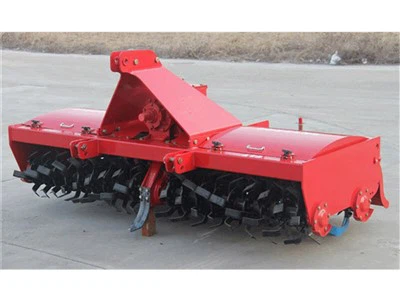

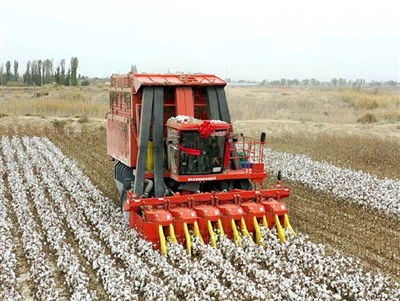

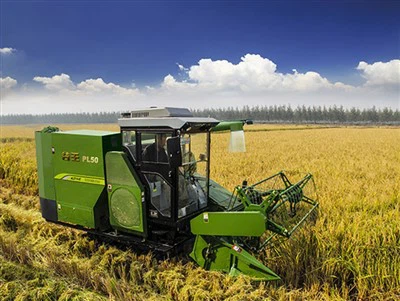
What Is Agricultural Rice Transplanter
A rice transplanter is a specialized transplanter fitted to transplant rice seedlings onto paddy fields. The two main types of rice transplanter are the riding type and walking type. The riding type is power-driven and can usually transplant six lines in one pass; the walking type is manually driven and can usually transplant four lines in one pass.
Types of Agricultural Rice Transplanter
The two types are as follows:
Riding Type Rice Planter
A riding type rice planter machine is like a tractor, but a lot smaller—its light weight allows you to drive it on the paddy field without disturbing the soil. Riding type rice planters can transplant six lines of seedlings in one go.
Walking Type Transplanter
The walking type transplanter machine is more fundamental—you have to push the planter machine from behind and guide it along the ditches. This type of transplanter is more economical to maintain, but they can only transplant up to four lines in one go.
Agricultural Rice Transplanter Mechanism
The mechanism is quite simple, it just involves some steps as.
01
There is one driving for as in case of riding it is motor and for walking type it is human.
02
Once the initialization is done there is some kind of mechanical parts inter-linked which creates several rotatory motions inside the machine.
03
And then the pick-up fork whenever comes upward takes the seedling from the tray and while going down it places the seedling into the mud.
And this process goes on again and again, and due to the slope type construction of tray space and tray shifter, seedlings tray slides move towards the pickup fork.

What Is the Use of Agricultural Rice Transplanter
Agricultural rice transplanters are advanced agricultural implements designed to simplify and enhance the process of transplanting rice seedlings in paddy fields. These machines have become indispensable tools for modern rice cultivation, offering several advantages over traditional manual methods.
Let's delve into the key uses and benefits of agricultural rice transplanters in the agricultural landscape.
Transplanting seedlings efficiently
Traditional method: Manual transplantation of rice seedlings involves labor-intensive activities, contributing to increased time and effort.
With rice transplanter: These machines automate the transplanting process, enabling farmers to cover large areas quickly and efficiently. They can transplant multiple seedlings simultaneously, significantly reducing the need for manual labor.
Labor savings
Traditional method: Manual transplanting requires a considerable workforce, and availability during peak planting seasons can be a challenge.
With rice transplanter: The automation of transplanting reduces dependence on manual labor, leading to substantial labor savings. This is particularly beneficial when labor availability is scarce or expensive.
Time efficiency
Traditional method: Manual transplanting is a time-consuming process, especially for large fields.
With rice transplanter: These machines operate at a faster pace, allowing farmers to complete transplanting quickly. This time efficiency is crucial during the narrow planting window in rice cultivation.
Precision planting
Traditional method: Achieving uniform spacing and depth manually can be challenging, leading to uneven plant growth.
With rice transplanter: These machines are equipped with mechanisms that ensure precise and uniform planting. This promotes consistent plant growth, leading to better yields.
Reduced transplanting shock
Traditional method: Manual uprooting and replanting of seedlings can cause transplanting shock, affecting plant health.
With rice transplanter: The machine's technology minimizes transplanting shock by handling seedlings carefully and placing them into the soil with minimal disturbance.
Increased productivity
Traditional method: Manual labor limitations can constrain overall productivity.
With rice transplanter: The efficiency and speed of these machines contribute to increased productivity, allowing farmers to manage larger fields and enhance their agricultural output.
Cost-effective farming
Traditional method: Labor costs for manual transplanting can constitute a significant portion of cultivation expenses.
With rice transplanter: While there is an initial investment in the machine, the long-term labor savings make it a cost-effective choice for many farmers, contributing to sustainable and profitable farming practices.
How to Choose the Right Agricultural Rice Transplanter
The following are the characteristics of an excellent agricultural rice transplanter to look for:
Guarantees even spacing for best growth.
Flexible enough to work in a wide range of fields.
Plants seedlings quickly, reducing manual work.
A user-friendly interface for effortless use.
Works well in the field and lasts a long time.
Functions well in a wide range of field conditions and rice cultivars.

The seeder works by positioning seeds into the seedbed, planting them at a specific, uniform depth. It is most typically drawn by tractors nowadays, and ensures an even distribution of crop seeds, while offering the seeds maximum protection from predators and from the elements, helping farmers achieve greater yields.
The seeder is made of a number of moving parts. First, the plough component cuts through the soil as the drill is pulled forward by a tractor. This leaves behind a furrow, into which the seed hopper component drops individual seeds in a uniform, evenly spaced manner. Then, finally, the harrow component covers the planted seeds with soil, covering them in the seedbed. This prevents the seeds from being eaten by birds, or from drying out through over exposure to sun and wind.
The Benefits of Using a Seeder to Sow Seeds
Improved Germination And Crop Establishment
One major advantage of using a seed drill is that it promotes better seed-to-soil contact. By placing seeds at the desired depth in the soil, a seed drill ensures optimal conditions for germination and crop establishment. This results in a more uniform and higher germination rate compared to traditional broadcasting methods where seeds are scattered on the surface and left to rely on natural forces for proper placement.
Efficient Use Of Seeds
Seed drills help reduce the number of seeds needed for planting by placing them precisely within rows and at the correct spacing, improving seed distribution. In contrast, broadcasting seeds can lead to over-seeding and wasted seeds, as they may not reach the ideal planting depth or may become targets for birds and pests.
Consistent Planting Depth
Achieving a consistent planting depth is essential for uniform plant growth, which impacts both crop yield and quality. Seed drills allow farmers to set the desired depth, ensuring seeds are placed evenly in the soil. Uniform plant growth can help increase crop yield and improve the overall quality of the harvest.
Reduced Soil Erosion And Moisture Conservation
Seed drills promote minimum tillage agriculture by eliminating the need for tilling the entire field to prepare it for planting. This reduces soil disturbance and helps conserve moisture in the soil, leading to less water usage and reduced soil erosion. Moreover, by creating furrows in the soil, seed drills promote better water infiltration, further aiding in moisture conservation and reducing the risk of run off and soil erosion.
Time And Labor Savings
Using a seed drill can significantly reduce the time and labor required for planting compared to manual seeding methods. This efficiency allows farmers to cover larger areas more quickly, leading to increased productivity and cost savings. In conclusion, using a seed drill offers various advantages, including improved germination, efficient seed usage, consistent planting depth, reduced soil erosion, and time and labor savings. These factors contribute to better crop yield and quality, making seed drills an integral part of modern agriculture.
Calibration Steps of Seeder
The method or procedure of testing the drill for the correct seed rate is called calibration of the seeder. Calibration is very important before putting the seeder in actual use for finding the desired seed rate, for the predetermining seed rate of the machine calibration has to be done.
Before using such farming implements in the field they should be calibrated. The steps of calibration of seeder or seed-cum-fertilizer drill are as follows:
Determine the nominal width of the drill (W).
Calculate the length of a strip (L) having nominal width W.
Calculate the number of revolutions (N) the ground wheel has to make to cover the length of the strip (L).
Jack up the drill so that the ground wheels move or turn freely. Make a mark on the drive wheel and also at a convenient place on the body of the drill to help in counting the revolutions of the drive wheel.
Put selected seed and fertilizer in the hopper and place a sack or container below each boot for seeds and fertilizers.
Fix the rate control adjustment for the seed and the fertilizer for maximum drilling. note this position on the control for reference.
Engage the clutch or adjustment the run-off for the hoppers and rotate the drive wheel at the speed N
The quantity of seed and fertilizer weighed, after weighing it, dropped from each opener and recorded on the datasheet.
Calculate the seed and fertilizer, dropped in kg/hectare, and record them on the datasheet.
Do the process again and again by adjusting the rate control till the desired rate of seeding and fertilizer drop get or obtained.
A seeder generally have following technical components:
Frame: A mild steel angle made to withstand heavy-duty farm activities, consisting of other parts of seeder.
Seed Box: Seed box like structure with a lid is made up of either galvanised iron or mild iron.
Seed Metering Mechanism: A mechanism where seeds are picked up from the seed box and dropped to the seed tube.
Drive Transmission System: It is a mechanism that consists of wheels, driving shaft, and sprocket chain assembly that carries seed picking discs.
Furrow Openers
Furrow openers open up the furrows or lines in the field to allow insertion of the seeds.
Covering Device Or Furrow Closer
Covering device or furrow closer helps to close the furrows with a layer of soil once the seeds are dropped into the field.
Transport Wheel
On the axle, there are two wheels for transport made of iron for durability. They transmit power to seed dropping mechanisms.
Our Factory
Shandong Fanqi International Trade Co., Ltd (Liangshan FuRun Automobile Technology Co,Ltd. )is located at the foot of Liangshan Mountain, which is famous at home and abroad. It is the only way to Jinan Zhengzhou section of 220 National Highway, which is by the Jiheze Highway in the east and the Beijing Kowloon Railway in the west.
The company is approved by the NationaI Development and Reform Commission of the automobile, trailer production enterprises, its enterpr ises have been listed in the National Development and Reform Comm is- sion "Announcement", and won the China Quality certification Center "CCC" certification enterpr ises,mainly engaged in the production of modified vehicles, semi-trailers, special vehicles, parts manufacturing,sales and technology development, The company'S own research AND DEVELOPMENT OF THE "LIGHT KING" high STRENGTH SERIES of special vehicles with its light weight,high strength characteristics sell well all over the country. and get customerspraise.


