


Freight Transport Trailer
The company is approved by the NationaI Development and Reform Commission of the automobile, trailer production enterprises, its enterpr ises have been listed in the National Development and Reform Comm is- sion "Announcement", and won the China Quality certification Center "CCC" certification enterpr ises,mainly engaged in the production of modified vehicles, semi-trailers, special vehicles, parts manufacturing,sales and technology development, The company'S own research AND DEVELOPMENT OF THE "LIGHT KING" high STRENGTH SERIES of special vehicles with its light weight,high strength characteristics sell well all over the country. and get customerspraise.
Why Choose Us
High Quality
Company has the first- -class standard and strong product ion capacity of flow process production tooling equipment,the use of advanced production technology and high quality raw materials and spare parts,with reliable quality assurance system, the maximum to meet user needs, Sincerely provide users with advanced, high quality series of special trailers.
Production Market
More than 2000 vehicles are sold domestically and exported to Russia, the Middle East, Australia, Central Asia, Southeast Asia, Africa, and other regions, providing more transportation solutions. We silently move forward
Advanced Equipment
Automatic longitudinal beam submerged arc welding line, advanced CNC web punching production line, fiber laser cutting machine cutting, automated web CNC punching production line, automated robot welding, automated longitudinal beam submerged arc line.

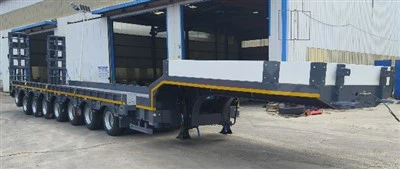


Types of Freight Transport Trailer
Dry van trailer
Dry vans are the stars of the truckload freight shipping industry, as this is the most commonly used type of freight shipping equipment. This type of trailer in freight truckload shipping is more than likely the one you will use. They are called ‘dry’ because shippers move their dry freight, which means goods that don’t require temperature control. A dry van is an enclosed trailer fully protected from external influence. They work for everything except perishable and oversized freight.
The most frequently moved commodities:
- Clothing, fabrics, textile
- Electronics and machinery
- Consumer packaged goods (CPG)
- Non-perishable food and beverages
- Retail products
Dry van trailer dimensions:
- Length: 28, 32, 36, 40, 42, 43, 45, 48, 53 feet
- Widths: 96 – 102 inches
- Height: 12.5 – 13.5 feet
Refrigerated trailers
In a nutshell, refrigerated trailers, or reefers, are just refrigerators on wheels. On the outside, they look like dry van trailers but have built-in climate control systems inside to maintain a specific temperature during transit. It’s not hard to guess that reefers typically move perishable products and healthcare goods requiring a particular temperature regime. Modern reefers suggest automated regulation tools that remotely regulate the temperature throughout the shipment.
The most frequently moved commodities:
- Perishable food and beverages
- Flowers
- Pharmaceuticals
- Fine art products
Refrigerated trailer dimensions:
- Length: 28, 32, 36, 40, 48, 51, 53 feet
- Widths: 96 – 102 inches
- Height: 12.5 – 13.5 feet
Flatbed trailers
The category of flatbed trucks includes the whole range of trailers of different sizes and designs (step deck trailer, side kit trailer, Conestoga trailer, etc. ). Generally, a flatbed is an open trailer with sides but no roof and a specific deck to load freight.
Flatbeds won’t work if your cargo is sensitive to wind or rain because these trailers don’t protect like dry vans. However, flatbed shipping may be the only reasonable solution for oversized freight. These trailers handle cargo of irregular shapes and sizes and are in high demand among industrial shippers.
The most frequently moved commodities:
- Oversized machinery
- Industrial equipment
- Steel products, pipes, and rigs
- Aircraft, engines
Flatbed trailer dimensions:
- Length: 40, 42, 45, 48, 53 feet
- Widths: 102 inches
- Height: 58 – 62 inches
Freight Trailer Manufacturing Process


Design and Engineering
The first step in the cargo trailer manufacturing process is the design and engineering stage. This is where the manufacturer determines the specifications and features of the trailer, including size, weight capacity, type of axles, and materials to be used. The manufacturer will also consider factors such as the type of goods that will be transported, the intended use of the trailer, and the regulations that must be followed.
Material Preparation
Once the design and engineering stage is complete, the manufacturer will begin to prepare the materials that will be used in the construction of the trailer. This includes cutting and shaping the steel, aluminum, or other materials that will be used for the frame, floor, and sides of the trailer. The manufacturer will also prepare the various parts and components that will be used in the trailer, such as the axles, wheels, lights, and other electrical components.
Frame Assembly
The next stage in the cargo trailer manufacturing process is the assembly of the frame. This is one of the most important stages, as the frame forms the backbone of the trailer and must be strong and durable. The frame is usually made from high-strength steel, which is welded together to form a solid structure. The manufacturer will also install any reinforcements, such as cross-members, to provide additional support and stability.
Floor and Wall Installation
Once the frame is complete, the manufacturer will install the floor and walls of the trailer. The floor is usually made from a combination of materials, including marine-grade plywood or aluminum sheets, which are chosen for their durability and resistance to moisture and rot. The walls of the trailer are typically made from aluminum or steel sheets and are attached to the frame using screws or welding.
Roof Installation
The roof of the cargo trailer is also an important component and must be strong and weather-resistant. The roof is usually made from aluminum or steel sheets, which are bent and formed to the shape of the trailer. The roof is then attached to the walls using screws or welding.
Axle and Wheel Installation
The next stage in the cargo trailer manufacturing process is the installation of the axles and wheels. The axles are usually made from steel and are designed to support the weight of the trailer and its contents. The wheels are attached to the axles using bolts, and the manufacturer will also install brakes and suspension systems, if necessary.
Electrical and Plumbing Systems
The electrical and plumbing systems are also important components of the cargo trailer and must be installed accurately to ensure that the trailer is safe and functional. The electrical system includes lights, wiring, and other components, while the plumbing system includes the installation of water tanks, sinks, and other components, if necessary.
Interior and Exterior Finish
The final stage of the cargo trailer manufacturing process is the interior and exterior finish. This is where the manufacturer installs the interior walls, roof liners, and other components to make the trailer more comfortable
How Our Trailer Customization Works
Choose a trailer
Has a large inventory of trailers you can use for your custom trailer base. Choose a brand-new or a new-to-you trailer in whatever size, shape or style you need.
Meet with us
We want to hear your vision for your custom trailer. During this meeting, we will discuss your specifications and how we can help bring your dream trailer to life.
Let us do the work
We will create a digital mock-up of what your trailer will look like. Once you confirm your custom trailer design, we will get to work.
Pick up or have your trailer delivered
We will contact you when your trailer is done, and you can either pick it up from our store or we can deliver it to its new home.
Our Custom Trailer Solutions
Factory-Built Custom Trailers: Our factory-built custom trailers are manufactured to the highest standards of quality and craftsmanship. With a wide range of sizes, styles, and configurations available, you’re sure to find the perfect solution for your hauling needs.
Onsite Service Professionals: In addition to our factory-built options, we also offer onsite service professionals who can install, modify, and upfit trailers with parts and accessories. Whether you need to add racks, shelving, lighting, or any other customization, our team has the expertise and experience to get the job done right.
Parts and Accessories: Looking to enhance the functionality and versatility of your trailer? We offer a comprehensive selection of parts and accessories to customize your trailer to your exact specifications. From hitch systems and brakes to ramps and tie-downs, we have everything you need to optimize your trailer for maximum performance.


