

Operating a flatbed semi - trailer isn't as simple as just hitching it up and hitting the road. There are a bunch of legal requirements that you gotta follow to stay on the right side of the law. As a flatbed semi - trailer supplier, I've seen firsthand how important it is for operators to understand these rules.
Registration and Titling
First off, you need to get your flatbed semi - trailer registered. This process varies from state to state in the US, but generally, you'll need to provide some basic info. You gotta have proof of ownership, like a bill of sale from the supplier (that's me in many cases). The registration usually involves paying a fee, which can depend on things like the trailer's weight and value. Once it's registered, you'll get a license plate and registration card.

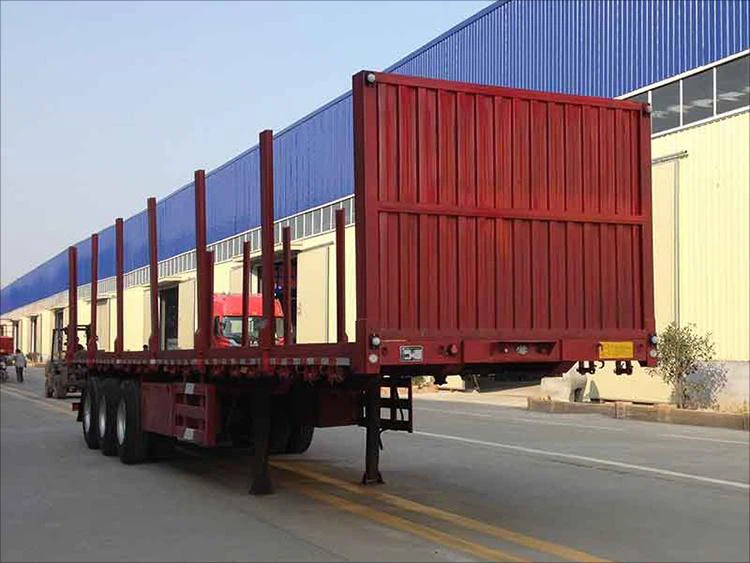
Titling is also crucial. A title is like a legal document that proves you own the trailer. When you buy a flatbed semi - trailer from us, we'll give you all the necessary paperwork to get the title transferred into your name. Without a proper title, you could run into big problems if you ever want to sell the trailer or if there's a dispute about ownership.
Insurance
Insurance is a must - have for operating a flatbed semi - trailer. You need to have liability insurance at the very least. This type of insurance covers you if you cause an accident and someone gets hurt or their property gets damaged. The minimum insurance requirements vary by state, but most states have some pretty strict rules.
For example, in some states, you might need to have at least $750,000 in liability insurance for a flatbed semi - trailer used in interstate commerce. That's a lot of money, but it's there to protect everyone on the road. You can also get additional insurance, like cargo insurance, to cover the goods you're hauling. If you're transporting expensive equipment or materials on our Straight Beam Flat Semi - Trailer, cargo insurance can give you peace of mind.
Safety Equipment
Flatbed semi - trailers need to be equipped with the right safety gear. This includes things like lights, reflectors, and brakes. The lights are super important, especially for visibility at night or in bad weather. You need to have working brake lights, turn signals, and running lights. Reflectors help other drivers see your trailer from different angles.
Brakes are another key safety feature. Your flatbed semi - trailer should have brakes that are in good working condition. In some cases, trailers over a certain weight are required to have their own braking system, separate from the tractor. This helps with stopping power and overall safety on the road.
Weight and Dimension Limits
There are strict weight and dimension limits for flatbed semi - trailers. These limits are in place to protect the roads and bridges and to ensure safe driving conditions. The maximum weight you can haul on a flatbed semi - trailer depends on a few factors, like the number of axles and the type of roads you're traveling on.
For example, on most interstate highways, the maximum gross vehicle weight (including the tractor and trailer) is 80,000 pounds. If you're carrying a load that exceeds this limit, you'll need to get a special overweight permit. These permits can be a hassle to get, but they're necessary if you need to transport heavy loads.
Dimension limits are also important. The length, width, and height of your flatbed semi - trailer and its load need to be within the legal limits. In general, the maximum width is 8.5 feet, and the maximum height is 13.5 feet. If your load is wider or taller than these limits, you'll need an over - dimension permit.
Driver Requirements
The person driving the tractor pulling the flatbed semi - trailer also has to meet certain requirements. In most cases, you need a commercial driver's license (CDL). To get a CDL, you'll have to pass a written test and a skills test. The written test covers things like traffic laws, safety regulations, and vehicle operation. The skills test includes a pre - trip inspection, a basic control skills test, and an on - road driving test.
Drivers also need to follow hours - of - service regulations. These rules limit the number of hours a driver can be on the road without taking a break. This is to prevent fatigue, which can be a major cause of accidents. For example, a driver can't drive more than 11 hours after 10 consecutive hours off duty.
Maintenance and Inspections
Regular maintenance and inspections are essential for operating a flatbed semi - trailer safely. You should have your trailer inspected regularly by a qualified mechanic. This includes checking the brakes, tires, lights, and other important components.
You also need to keep records of all maintenance and inspections. These records can be important in case of an accident or if you're pulled over by law enforcement. They show that you've been taking care of your trailer and following the rules.
Permits and Special Regulations
Depending on what you're hauling and where you're going, you might need special permits. For example, if you're transporting hazardous materials on our Hauling Semi - trailer, you'll need a hazardous materials endorsement on your CDL and special permits.
Some states also have their own special regulations. For example, certain states might have restrictions on the types of loads you can carry on their roads. It's important to do your research and make sure you have all the necessary permits and comply with all the regulations before you hit the road.
Why Choose Our Flatbed Semi - Trailers?
At our company, we understand all these legal requirements inside out. That's why we build our flatbed semi - trailers to meet or exceed all the safety and regulatory standards. Whether you're looking for a Straight Beam Flat Semi - Trailer, a Spread Wing Semi - trailer, or a Hauling Semi - trailer, we've got you covered.
Our trailers are built with high - quality materials and the latest technology. They're designed to be durable, reliable, and easy to maintain. And when you buy from us, we'll provide you with all the support and paperwork you need to get your trailer up and running legally.
If you're in the market for a flatbed semi - trailer, don't hesitate to reach out to us. We're here to answer all your questions and help you find the perfect trailer for your needs. Whether you're a small business owner or a large - scale hauling company, we can work with you to find a solution that fits your budget and requirements. Let's start a conversation about how we can help you get the most out of your flatbed semi - trailer operation.
References
- Federal Motor Carrier Safety Administration (FMCSA) regulations
- State - specific transportation department guidelines


