In the realm of chemical transportation, the role of chemical semi - trailers is of utmost significance. These specialized vehicles are designed to safely and efficiently transport a wide range of chemicals, from corrosive acids to flammable solvents. One often overlooked but crucial aspect of these trailers is their noise - reduction features. As a leading chemical semi - trailer supplier, we understand the importance of these features not only for the comfort of drivers but also for environmental and regulatory compliance.
1. Importance of Noise Reduction in Chemical Semi - Trailers
Noise pollution is a growing concern in modern society. In the context of chemical semi - trailers, excessive noise can have several negative impacts. Firstly, it can cause fatigue and stress for the drivers. Long - haul trips are already demanding, and constant exposure to high - level noise can further degrade the driver's well - being, leading to reduced concentration and potentially increasing the risk of accidents.
Secondly, from an environmental perspective, noise from moving vehicles can disrupt wildlife habitats and cause annoyance to residents living near transportation routes. Moreover, many regions have strict noise regulations in place. By incorporating effective noise - reduction features in our chemical semi - trailers, we ensure that our clients can operate within the legal framework, avoiding costly fines and maintaining a good public image.
2. Key Noise - Reduction Features
2.1 Insulation Materials
One of the primary methods of reducing noise in chemical semi - trailers is through the use of high - quality insulation materials. These materials act as a barrier, absorbing and dampening the sound waves generated by the movement of the vehicle and the sloshing of the chemicals inside the tank.
We use advanced fiberglass insulation in our trailers. Fiberglass has excellent sound - absorbing properties due to its porous structure. The tiny air pockets within the fiberglass trap sound waves, converting their energy into heat and reducing the overall noise level. Additionally, it is lightweight, which is an important factor in the design of semi - trailers as it helps to improve fuel efficiency without sacrificing payload capacity.
Another insulation material we employ is polyurethane foam. Polyurethane foam is known for its high - density and excellent insulation performance. It can be sprayed onto the interior walls of the trailer tank, creating a seamless and effective sound - absorbing layer. This material also provides thermal insulation, which is beneficial for maintaining the temperature of the transported chemicals.
2.2 Vibration Dampening
Vibrations are a major source of noise in semi - trailers. The movement of the vehicle on the road, the operation of the engine, and the interaction between the tank and the chassis all generate vibrations that can be transmitted as noise. To address this issue, we incorporate vibration - dampening technologies in our chemical semi - trailers.
One such technology is the use of rubber mounts between the tank and the chassis. These rubber mounts act as shock absorbers, reducing the transfer of vibrations from the chassis to the tank. They are designed to have a high degree of flexibility, allowing them to absorb and dissipate the energy of the vibrations.
In addition, we also use vibration - dampening coatings on the interior and exterior surfaces of the tank. These coatings are made of special polymers that can absorb and dampen vibrations. They are applied in a thin layer, which does not add significant weight to the trailer but can effectively reduce the noise generated by vibrations.
2.3 Aerodynamic Design
The aerodynamic design of a chemical semi - trailer can also have a significant impact on noise reduction. When a vehicle moves through the air, it creates turbulence, which can generate noise. By optimizing the shape of the trailer, we can reduce the amount of turbulence and, consequently, the noise level.
Our trailers feature a streamlined design with smooth curves and edges. This design reduces the air resistance and the formation of turbulent airflows around the trailer. Additionally, we use fairings and spoilers to further improve the aerodynamics. These components help to direct the airflow smoothly over and around the trailer, minimizing the noise caused by air movement.
3. Comparison with Other Types of Semi - Trailers
It is interesting to compare the noise - reduction features of our chemical semi - trailers with other types of semi - trailers, such as Cryogenic Liquid Semi - trailer and Dongfeng Oil Tank Semi - trailer.
Cryogenic liquid semi - trailers are designed to transport extremely cold liquids, such as liquefied natural gas (LNG). These trailers often require special insulation to maintain the low temperature of the cargo. While the insulation in cryogenic trailers also helps with noise reduction to some extent, the focus is more on thermal insulation. Our chemical semi - trailers, on the other hand, are optimized for both noise and chemical compatibility, with insulation materials that are resistant to a wide range of chemicals.
Dongfeng oil tank semi - trailers are mainly used for transporting oil products. Similar to chemical semi - trailers, they also need to address noise issues. However, the nature of the transported cargo in oil tank trailers is different from that in chemical semi - trailers. Chemicals can be more corrosive and reactive, which requires our trailers to have additional protective layers and specialized materials in the insulation and tank construction. This also affects the noise - reduction design, as the materials need to be carefully selected to ensure both chemical resistance and sound - absorbing properties.
4. The Impact of Noise - Reduction Features on the Overall Performance
The noise - reduction features in our chemical semi - trailers not only reduce the noise level but also have a positive impact on the overall performance of the trailers.
Firstly, as mentioned earlier, the use of lightweight insulation materials helps to improve fuel efficiency. Since the trailer is lighter, the engine has to work less to move the vehicle, resulting in lower fuel consumption. This is not only beneficial for the environment but also for the operating costs of the clients.

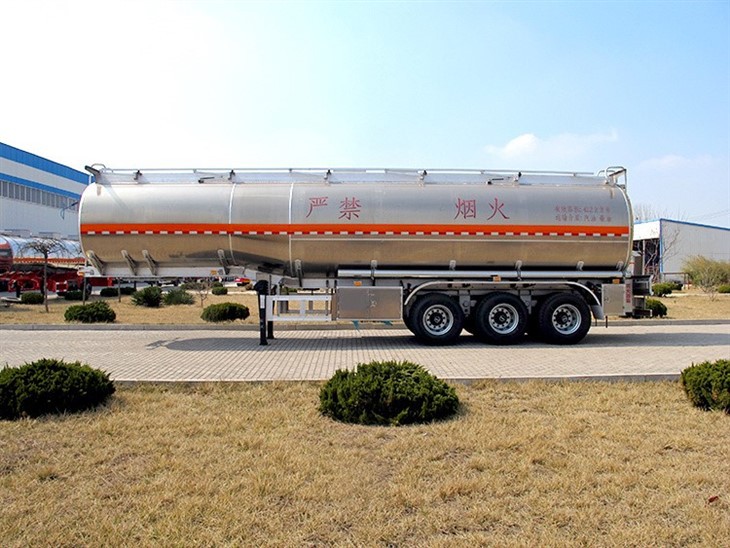
Secondly, the vibration - dampening technologies and aerodynamic design improve the stability and handling of the trailer. Reduced vibrations mean less wear and tear on the components, leading to a longer service life of the trailer. The improved aerodynamics also reduce the drag on the vehicle, which can enhance the overall driving performance and safety.
5. Future Developments in Noise - Reduction Technology
The field of noise - reduction technology is constantly evolving, and we are committed to staying at the forefront of these developments. In the future, we expect to see the use of more advanced materials, such as nanocomposites, in our chemical semi - trailers. Nanocomposites have unique properties that can provide even better sound - absorbing and vibration - dampening capabilities compared to traditional materials.
We also anticipate the integration of smart sensors and control systems in our trailers. These systems can monitor the noise level in real - time and adjust the noise - reduction measures accordingly. For example, if the sensors detect an increase in vibrations, the system can automatically activate additional vibration - dampening mechanisms.
6. Conclusion
In conclusion, the noise - reduction features of our chemical semi - trailers are an essential part of their design. They offer numerous benefits, including driver comfort, environmental protection, regulatory compliance, and improved overall performance. As a chemical semi - trailer supplier, we are dedicated to providing our clients with the highest - quality trailers that incorporate the latest noise - reduction technologies.
If you are in the market for a chemical semi - trailer or are interested in upgrading your existing fleet, we invite you to contact us for more information. Our team of experts is ready to assist you in selecting the right trailer that meets your specific requirements. We look forward to the opportunity to work with you and help you achieve a more efficient and quiet chemical transportation operation.
References
- "Handbook of Noise Control" by Cyril M. Harris
- "Vehicle Aerodynamics" by Joseph Katz
- "Insulation Materials: Properties and Applications" by John A. Barker