

As a leading supplier of chemical semi-trailers, I am often asked about the anti-roll features of our products. In this blog post, I will delve into the various anti-roll mechanisms and technologies that make our chemical semi-trailers safe and reliable for transporting hazardous chemicals.
Understanding the Importance of Anti-Roll Features
Chemical semi-trailers are designed to carry large volumes of liquid chemicals, which can be extremely hazardous if spilled or released into the environment. One of the biggest risks associated with transporting these chemicals is the potential for the trailer to roll over, especially when navigating sharp turns, uneven roads, or during emergency maneuvers. A rollover can not only result in the spillage of chemicals but also cause significant damage to the trailer, the truck, and the surrounding infrastructure. It can also pose a serious threat to the safety of the driver and other road users.
Therefore, anti-roll features are essential for ensuring the stability and safety of chemical semi-trailers. These features help to prevent rollovers by reducing the risk of lateral forces acting on the trailer and improving its overall balance and handling.
Key Anti-Roll Features of Our Chemical Semi-Trailers
Low Center of Gravity
One of the most effective ways to prevent rollovers is to lower the center of gravity of the trailer. Our chemical semi-trailers are designed with a low-profile tank that is mounted close to the ground. This reduces the height of the center of gravity, making the trailer more stable and less likely to tip over. Additionally, the tank is positioned in the center of the trailer, which helps to distribute the weight evenly and further improve stability.
Wide Track Width
Another important anti-roll feature is the wide track width of our chemical semi-trailers. The track width refers to the distance between the wheels on the same axle. A wider track width provides a larger base of support, which helps to resist lateral forces and prevent the trailer from rolling over. Our trailers are designed with a wide track width to ensure maximum stability, especially when carrying heavy loads.
Suspension System
The suspension system plays a crucial role in the anti-roll performance of a chemical semi-trailer. Our trailers are equipped with a high-quality suspension system that is designed to absorb shocks and vibrations, improve ride comfort, and enhance stability. The suspension system also helps to maintain the correct tire contact with the road surface, which is essential for preventing skidding and loss of control.
One of the key components of our suspension system is the anti-roll bar. The anti-roll bar is a metal rod that connects the left and right sides of the suspension system. When the trailer leans to one side, the anti-roll bar resists the movement and helps to keep the trailer level. This reduces the risk of rollovers and improves the overall handling of the trailer.
Electronic Stability Control (ESC)
In addition to the mechanical anti-roll features, our chemical semi-trailers are also equipped with advanced electronic stability control (ESC) systems. ESC is a safety technology that uses sensors to monitor the trailer's movement and automatically applies the brakes to individual wheels or reduces engine power to help the driver maintain control of the vehicle.
When the ESC system detects that the trailer is starting to roll over or lose control, it will intervene and take corrective action. For example, if the trailer is turning too sharply, the ESC system may apply the brakes to the inside wheels to help reduce the lateral forces and prevent the trailer from tipping over. This technology has been proven to significantly reduce the risk of rollovers and improve the safety of commercial vehicles.
Baffles and Compartments
Inside the tank of our chemical semi-trailers, we install baffles and compartments to help reduce the movement of the liquid cargo. Baffles are vertical or horizontal partitions that divide the tank into smaller sections. Compartments are separate chambers within the tank that can be used to store different types of chemicals.
The purpose of the baffles and compartments is to prevent the liquid cargo from sloshing around inside the tank, which can cause the trailer to become unstable. When the trailer is in motion, the liquid cargo tends to move back and forth and from side to side, creating a shifting weight distribution that can increase the risk of rollovers. The baffles and compartments help to dampen the movement of the liquid and keep it more evenly distributed, which improves the stability of the trailer.
Comparison with Other Types of Semi-Trailers
To better understand the importance of the anti-roll features of our chemical semi-trailers, let's compare them with other types of semi-trailers, such as the F3000 Mixer Truck and the Tank Transport Semi-trailer.
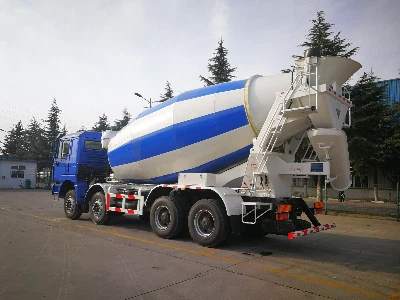
The F3000 Mixer Truck is primarily used for transporting concrete, which is a heavy and viscous material. While the mixer truck also has some anti-roll features, such as a low center of gravity and a wide track width, it is not specifically designed for transporting hazardous chemicals. The tank of the mixer truck is usually larger and more cylindrical in shape, which can make it more prone to rollovers when carrying a full load.

The Tank Transport Semi-trailer is a more general-purpose trailer that can be used for transporting a variety of liquids, including chemicals. However, not all tank transport semi-trailers are equipped with the same level of anti-roll features as our chemical semi-trailers. Some trailers may have a higher center of gravity, a narrower track width, or a less sophisticated suspension system, which can increase the risk of rollovers.
In contrast, our chemical semi-trailers are specifically designed and engineered to meet the strict safety requirements for transporting hazardous chemicals. We use the latest technologies and materials to ensure that our trailers have the best possible anti-roll performance and are as safe as possible on the road.
The Role of Anti-Roll Features in Transporting Dangerous Goods
When it comes to transporting dangerous goods, such as chemicals, the anti-roll features of the semi-trailer are of utmost importance. The safety of the driver, the public, and the environment depends on the ability of the trailer to stay upright and stable during transit.
Our chemical semi-trailers are designed to meet or exceed all relevant safety standards and regulations for transporting dangerous goods. In addition to the anti-roll features mentioned above, we also use high-quality materials and construction techniques to ensure the integrity of the tank and the overall structure of the trailer. We also conduct rigorous testing and inspections to ensure that our trailers are safe and reliable before they are delivered to our customers.
Conclusion
In conclusion, the anti-roll features of our chemical semi-trailers are essential for ensuring the safety and stability of these vehicles during the transportation of hazardous chemicals. By incorporating a low center of gravity, wide track width, high-quality suspension system, electronic stability control, and baffles and compartments, we are able to provide our customers with trailers that are less likely to roll over and more resistant to lateral forces.
If you are in the market for a chemical semi-trailer, I encourage you to consider our products. We are committed to providing our customers with the highest quality trailers that are designed to meet their specific needs and requirements. Our trailers are not only safe and reliable but also cost-effective and easy to maintain.
To learn more about our chemical semi-trailers and to discuss your specific needs, please contact us today. We look forward to working with you and helping you find the perfect solution for your transportation needs.
References
- Federal Motor Carrier Safety Administration (FMCSA). (n.d.). Commercial Motor Vehicle Rollover Prevention. Retrieved from [FMCSA website]
- Society of Automotive Engineers (SAE). (n.d.). Standards for Commercial Vehicle Safety. Retrieved from [SAE website]


