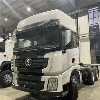
I. Localized Production Becomes a New Industry Trend
Facing challenges such as the rise of global trade protectionism and fluctuations in tariff policies, domestic trailer enterprises are accelerating the adjustment of their overseas strategies, and localized production has become an important breakthrough. Since 2024, leading enterprises such as CIMC Vehicles and Luoxiang Automobile have successively announced investments in building factories in Thailand, Mexico, South Africa and other places, with a total expected investment exceeding 5 billion yuan. These production bases will mainly focus on the assembly and production of models with mainstream local demand, and some bases will also be supporting the construction of parts supply chain systems to realize a closed-loop operation of "local procurement, local production and local sales". Data shows that the proportion of overseas localized production of Chinese trailer enterprises has increased from 5% three years ago to 12%, and is expected to exceed 20% by 2026.
II. Multiple Advantages Drive Localized Layout
The localized production model brings multiple competitive advantages to enterprises. Firstly, it effectively avoids trade barriers. By setting up factories in target countries, enterprises can enjoy local tariff preferential policies, reduce export costs, and respond to trade frictions such as anti-dumping and countervailing duties. Secondly, it greatly shortens the delivery cycle. Localized production increases the speed of product response to market demand by more than 30%, while reducing cross-border logistics risks and transportation costs. In addition, being close to the market facilitates enterprises to accurately grasp the needs of local users and quickly adjust product designs. For example, optimizing the anti-bump performance of trailers for the African market and customizing heat dissipation systems suitable for tropical climates for the Southeast Asian market.
III. Challenges and Opportunities Coexist, Industry Accelerates Integration
Overseas localized layout also faces many challenges, including differences in local policies and regulations, rising labor costs, and difficulties in supply chain integration. Due to limited financial strength and lack of overseas operation experience, some small and medium-sized enterprises are under great pressure in the localization process. In this context, industry integration is accelerating. Leading enterprises expand the scale of overseas layout through mergers and acquisitions, cooperation and other methods, while small and medium-sized enterprises focus on niche markets to form a differentiated competitive pattern. Industry experts said that the next 3-5 years will be a critical period for the overseas localized development of Chinese trailer enterprises. Enterprises with technological advantages, financial strength and global operation capabilities will further seize market share, promoting the comprehensive upgrading of China's trailer industry from "product export" to "brand going global".