I. Core Classification System of Trailers
The classification of trailers should be based on structural characteristics and application scenarios, with different types corresponding to differentiated transportation needs, which also serves as the basis for matching market demands in import and export business.
1. Classification by Connection Method
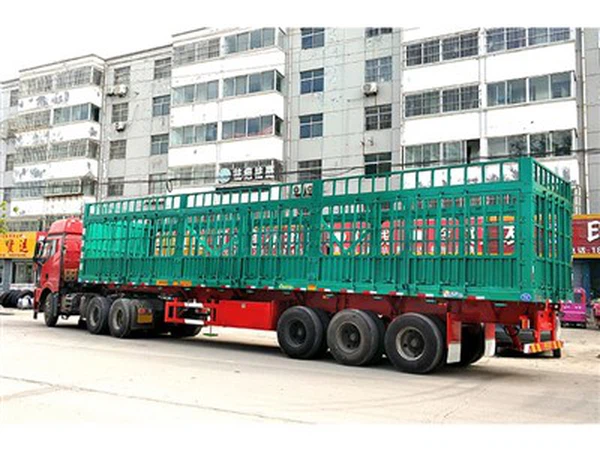
• Semi-trailers: The axles are placed behind the center of gravity of the vehicle, and part of the total weight is borne by the tractor. With high load-bearing capacity and driving stability, they have become the main force in long-distance trunk transportation, accounting for more than 70% of the global trailer market. Container semi-trailers are even the core equipment for international freight transportation.
• Full trailers: Connected to the tractor through a drawbar, they bear the entire weight by themselves and can stand independently. Suitable for short-distance turnover in factories, docks and other yards, they have significant stability advantages under complex road conditions such as mountainous areas.
• Center-axle trailers: The axle is located at the center of the cargo compartment's center of gravity and cannot support independently when disconnected from the tractor. With a low center of gravity and flexible turning, they are mostly used for bulk cargo transportation on fixed dedicated lines and are a common choice for cross-border dedicated line logistics.
2. Classification by Structure and Purpose
• General transportation type: Including basic types such as flatbed trailers (suitable for bulk goods like construction materials), stake trucks (for goods requiring ventilation such as agricultural and sideline products), and van trailers (for protecting fragile goods like electronic products), which meet the needs of multi-scenario general cargo transportation.
• Specialized transportation type: Low-bed trailers are specially designed for heavy equipment such as engineering machinery, with a body height as low as 0.8 meters; refrigerated and insulated trailers can maintain a temperature control range of -25℃ to 15℃, suitable for cross-border transportation of fresh food and pharmaceuticals; tank trailers adopt a sealed tank structure and are used for transporting fluid goods such as petroleum and chemicals.
• Container-specific type: The frame structure accurately matches the size of standard containers, realizing rapid conversion between ships, vehicles and yards, and serving as the core carrier for international multimodal transportation.
II. Analysis of Key Technologies and Core Components
Technical configuration directly determines the load-bearing capacity, safety and operational efficiency of trailers, and is also a core indicator of the competitiveness of import and export products.
1. Basic Load-Bearing System
As the core load-bearing component, the frame is generally formed by welding Q345B high-strength steel. Some high-end models use aluminum alloy materials to achieve a weight reduction of 30%, which not only increases the cargo capacity but also reduces fuel consumption. Among t
hem, the structural integrity of the load-bearing beam is crucial; once wear or deformation occurs, it will lead to uneven stress on the axles, causing abnormal tire wear and seriously affecting transportation safety and cost control.
2. Safety and Shock Absorption System
• Braking system: Air braking technology is mainly adopted, combined with ABS anti-lock braking devices. The braking response time should be less than 0.3 seconds, and the air tank pressure should be maintained at 0.7-0.9MPa. Some models exported to Europe also need to comply with the EBS system standards.
• Suspension system: Leaf spring suspension is suitable for heavy-load scenarios, while air suspension adapts to different loads by adjusting air pressure through ECU. The dynamic fatigue life should exceed 500,000 cycles, which can effectively reduce the damage to precision goods caused by road impact.
3. Connection and Electrical System
As the core of connection, the fifth wheel (traction pin) needs to bear a static load of more than 20 tons and must pass ISO certification to ensure safe coupling with the tractor; the electrical system adopts wire harnesses with IP67 protection level, combined with 12V/24V dual-voltage LED lights, ensuring the reliability of signal transmission in harsh environments.
III. Core Compliance Points for Import and Export of Trailers
Access standards vary significantly among different countries and regions, and compliance is a prerequisite for cross-border business.
1. Certification Requirements for Major Markets
• European and American markets: Need to comply with UNECE R13 braking standards and GB7258 Motor Vehicle Safety Technical Conditions. The European market also requires CE certification, while North America mandates compliance with FMVSS standards.
• Australian market: Mandatorily requires ADR certification. Each vehicle must be equipped with a unique VIN code, and batch exports also need to have WMI certification and ISO9001 quality management system certification.
• South American market: Exports to countries such as Argentina need to pass local inspection and appraisal, and submit documents such as vehicle conformity certificates and quality inspection reports to ensure compliance with local safety and quality standards.
2. Core Process Specifications
1. Preparatory work: Complete vehicle inspection and appraisal, obtain certificates of conformity, ISO certification and other documents, and clarify the tariff policies and technical barriers of the target market.
2. Customs declaration and inspection: Entrust qualified freight forwarders to handle the procedures, ensure consistency between documents and cargo information, and focus on verifying whether vehicle markings and safety configurations meet the requirements of the importing country.
3. Destination customs clearance: Prepare in advance the certification documents, commercial invoices and other materials required by the importing country, and cooperate with local customs to complete cargo verification and tariff payment.
IV. Industry Development Trends and Market Opportunities
The global trailer market size is expected to exceed 45 billion US dollars by 2025, with the Chinese market leading with a growth rate of 5.5%-6%. The industry is undergoing structural changes.
1. Technology Upgrade Directions
• Lightweight: The application ratio of high-strength steel, aluminum alloy and other materials continues to increase. Leading enterprises have achieved a weight reduction of more than 800 kg per semi-trailer, significantly reducing the fuel cost of cross-border transportation.
• Intelligentization: ADAS assisted driving, tire pressure monitoring and remote diagnosis systems are rapidly popularized. The penetration rate of intelligent tractors is expected to exceed 45% by 2025, and intelligent collaboration between trailers and tractors has become a new trend.
• New energy adaptation: The research and development of trailer adaptation technologies for electric and hydrogen fuel tractors is accelerating, and large-scale pilots of new energy trailers have been realized in closed scenarios such as ports.
2. Changes in Market Structure
Standardization and specialization have become the mainstream. Driven by policies, the utilization rate of national standardized semi-trailers will increase to more than 65% by 2025; the demand for specialized trailers in segmented fields such as cold chain logistics and dangerous goods transportation is growing at a rate of over 15%, becoming a new growth point for cross-border transportation. Relying on the industrial chain advantages, Chinese enterprises are steadily increasing their share in the global mid-to-high-end market, and have significant competitive advantages especially in countries along the "Belt and Road".