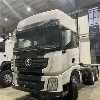
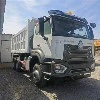
Semi-trailers are the main force in the domestic transportation market, especially in long-distance cargo transportation, where they almost dominate. The axle of a semi-trailer is usually installed behind the vehicle's center of gravity, meaning it cannot independently maintain balance. Additionally, semi-trailers do not have their own driving force and rely on a tractor for propulsion.
Semi-trailers are categorized into various types based on their applications, including flatbed, gooseneck, concave beam, warehouse rack, box type, container type, and dump truck. Compared to ordinary trucks, semi-trailers can improve transportation efficiency by 30-50%, reduce costs by 30-40%, and lower fuel consumption by about 20-30%.
With ongoing developments in vehicle technology, models such as mid-axle trucks, double trailers, and car trains have emerged in China, some offering advantages in length limits and cargo capacity compared to semi-trailers. This raises questions among some owners: Has the peak era of semi-trailers passed? Will they be phased out in the future?
From the current perspective, such concerns are unnecessary, which can be analyzed from three points:
Semi-trailers align with China's national conditions.
China has a vast land area with diverse terrains, including plains, hills, and mountains. Domestic road conditions are often complex and harsh compared to those in other countries. There are also issues like uneven road network development and lagging infrastructure at transportation stations. Semi-trailers are flexible, fast, have a large carrying capacity, and are efficient and stable, meeting the majority of cargo transportation needs. Moreover, compared to emerging vehicle models, the investment cost for semi-trailers is lower, making them a preferred choice for most logistics companies and retail investors in the general cargo transportation market due to their cost-effectiveness.
Current semi-trailer numbers in European countries.
Europe boasts a well-developed logistics system with advanced transportation and supporting technologies. Some argue that the current state of the semi-trailer industry in Europe reflects the future for China, and there is some truth to this. In European countries with advanced vehicle technology, semi-trailers account for nearly 70-80% of total transportation volume. According to statistics, sales of semi-trailers in Europe reached around 680,000 units this year, and it is expected that their market share will continue to grow steadily for a considerable period.
No current models can completely replace semi-trailer trucks.
If semi-trailers were to exit the market, new models would need to emerge and gain widespread use. Currently, there is no new model that can fully replace semi-trailer vehicles. The main types of trailers globally include semi-trailers, full trailers, mid-axle trailers, and car trains. Full trailers, although present in China for some time, struggle with poor driving stability and are not allowed on highways. They are mostly used in port and factory transport. Center-axle trailers can be longer for more cargo space, but they struggle on bumpy roads and have high purchase and maintenance costs, leading to instability during operation. Many owners report challenges in driving them, such as difficulty turning and excessive shaking.
Car trains appear appealing, with the capability to carry more cargo, but they remain underused in China due to high costs, poor stability, susceptibility to drifting, and demanding road conditions.
Overall, the status of compliant semi-trailers in the market is unlikely to change significantly in the near future. However, non-compliant models, such as flatbed dump trucks and oversized container semi-trailers, may face scrutiny, fines, and potential elimination under strict traffic management inspections.