I. Core Classification System of Trailers
Trailers feature a multi-dimensional classification system, where different categories correspond to distinct structural characteristics and application scenarios, forming the basis for accurately meeting transportation needs.
Classified by Connection Method with Tractors
• Full Trailers: Bear all their weight independently, connected to tractors via drawbars, and can stand stably on their own-like "independent partners". They are suitable for short-distance cargo transfer in areas such as factories, docks, and warehouses, leveraging flexibility to complete short-haul handling tasks.
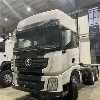
• Semi-Trailers: Have axles positioned behind the center of gravity, with part of the total weight borne by the tractor. They rely on support legs to stand and serve as "capable assistants" for long-distance transportation. Boasting strong load-bearing capacity and high driving stability, they are widely used in cross-regional trunk transportation and dominate the road transport trailer market.
• Center-Axle Trailers: Have axles at the center of the cargo compartment's gravity, unable to support themselves independently when detached from the tractor. They feature a low center of gravity and compact structure, making them suitable for fixed dedicated-route transportation and enabling efficient distribution on specific routes.
Classified by Structure and Purpose
This is the classification method most closely aligned with practical applications, directly determining a trailer's cargo adaptability:
• General Transportation Type: Including flatbed trailers (simple structure, suitable for cargo like construction materials with no special protection needs), stake trucks (good ventilation, used for livestock and poultry requiring air circulation), and box trailers (fully enclosed structure, protecting precision goods such as electronic products).
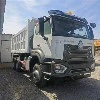
• Specialized Transportation Type: Covering low-bed trailers (low body height, carrying large equipment and engineering machinery), car carriers (multi-parking space design for efficient automobile transportation), refrigerated/insulated trailers (precise temperature control, suitable for temperature-sensitive goods like fresh produce and pharmaceuticals), tank trailers (sealed tanks for transporting petroleum and chemical liquids), bulk powder trailers (leak-proof structure for conveying cement, flour, etc.), and container trailers (adapting to standard containers, serving as core equipment for international freight).
II. Current Development Status of the Trailer Industry
Steady Expansion of Market Scale
China's trailer industry shows a sustained growth trend. In 2024, its output was approximately 1.5 million units, with a market scale of 80 billion yuan. It is estimated that the market scale will increase to 95 billion yuan in 2025 and is expected to exceed 120 billion yuan by 2030, with a compound annual growth rate of about 8.2%. Among them, refrigerated trailers and hazardous chemical transport trailers have seen significant growth, with their 2024 market scales reaching 12 billion yuan and 9 billion yuan respectively, becoming core growth drivers in the segmented market.
Distinct Characteristics of Import and Export Markets
Chinese-manufactured trailers are widely favored in the international market due to their cost-performance advantages. In 2024, the export volume reached approximately 80,000 units, with an export value of 6 billion yuan, mainly sold to countries and regions such as Russia, Brazil, and Southeast Asia. With the advancement of the "Belt and Road" Initiative, overseas demand continues to rise, and the export scale is expected to exceed 200,000 units by 2030.
Dual-Driver of Policies and Technology
National policies serve as an important guide for industry development: the New Energy Vehicle Industry Development Plan promotes the application of new energy trailers, and the National VI emission standard accelerates the upgrading of traditional fuel-powered trailers. Technologically, the number of intelligent technology-equipped trailers reached 300,000 units in 2024, with a market scale of 25 billion yuan, injecting innovative momentum into the industry.
III. Three Future Development Trends of the Industry
1. Accelerated Penetration of New Energy
Driven by environmental policies and technological progress, new energy trailers are on the rise. Their output reached 50,000 units in 2024, and the market scale is expected to exceed 15 billion yuan by 2030, accounting for over 35% of the total market. The upgrading of battery technology and the improvement of charging infrastructure will further unlock market potential.
2. In-depth Integration of Intelligence
Internet of Things (IoT) and big data technologies are widely applied in the trailer field. Through systems such as GPS positioning, intelligent dispatching, remote monitoring, and collision avoidance early warning, transportation route optimization and real-time vehicle status monitoring are realized, significantly improving operational efficiency and safety. It is expected that the number of intelligent trailers will reach 1 million units by 2030, with a market share of 30%.
3. Upgrading of Lightweight and Modular Design
The application of new materials such as high-strength steel and aluminum alloys has significantly reduced the weight of trailers, directly improving cargo-carrying efficiency and reducing energy consumption. Modular design simplifies the production process, enables quick replacement and maintenance of components, and adapts to the rapid conversion of transportation needs across multiple scenarios.